WE RESPOND TO YOUR NEEDS 414-271-1440
Five Winter Driving Mistakes that Lead to Personal Injury Cases in Wisconsin
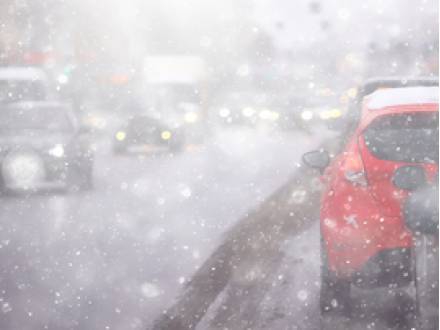 Wisconsin winters are brutal, and nowhere is this more true than the road conditions in February. Many lives are lost and many more people are injured on snowy and icy roads. What makes many of these crashes so frustrating is that so many of them are not truly accidents. They are the direct result of bad choices made by other drivers.
Wisconsin personal injury law allows people injured by negligent drivers to hold them accountable for those choices, even when the weather is bad. If you are hurt by a careless driver in 2026, our Milwaukee personal injury attorneys are here to help. We offer free consultations and the full resources of a large firm to fight for what you deserve.
Here are five winter driving mistakes that commonly lead to serious car accidents and personal injury lawsuits.
Five Common Winter Driving Errors that Lead to Accidents and Injuries
Driving Too Fast
Speed is the single most common factor in winter crash cases. Wis. Stat. § 346.57 requires drivers to go at a speed that is reasonable under the conditions at the time. Just because the posted speed limit is 65, a driver does not have permission to drive 65 miles per hour through a snowstorm. The posted limit is set for clear, dry roads. When the pavement is packed with snow and slush, driving at or near that limit can be a serious act of negligence.
The data backs this up. Nearly 18,000 speed-related crashes and 163 fatalities were reported in Wisconsin in one recent year alone. Of those speed-related incidents, snow and slush were contributing factors in roughly one-third of them. When a driver plows into your car at an unreasonable speed and you are injured as a result, their choice to ignore road conditions becomes the foundation of a personal injury claim.
Speed also multiplies the consequences of every other mistake on this list. A driver who is going too fast has less time to react, less ability to stop, and far more destructive force when impact occurs.
Not Clearing Snow and Ice Off a Vehicle
You see this every single winter in Milwaukee: A driver who brushes off just enough of the windshield to see straight ahead and leaves the rest of the car buried. The roof is loaded with snow. The rear window is a sheet of ice. And they pull right out onto the highway.
This is against Wisconsin law. State law requires drivers to have unobstructed vision. Failing to clear windshields, windows, headlights, taillights, and the roof of the vehicle before driving can result in serious fines in the base case scenarios.
In the worst case scenarios, snow or ice flies off a car's roof and hits another vehicle, causing a crash or forcing a driver to swerve. The person who left that snow in place can be held liable for the injuries that follow. Driving with obscured windows is direct evidence of negligence when that limited visibility contributes to a crash.
At Gimbel, Reilly, Guerin & Brown, LLP we pay very close attention to whether the vehicle that caused a crash was safe to drive. Surveillance and dashcam footage, witness accounts, and even the pattern of the crash itself can all help show that a driver's failure to clear their vehicle was a direct cause of what happened to you.
Tailgating
Stopping distances on snow and ice are dramatically longer than on dry pavement. Safety guidance for winter driving recommends maintaining at least six seconds of following distance under slippery conditions, and more when visibility is particularly poor. Despite this, rear-end collisions during winter storms are among the most common crashes.
Tailgating in winter conditions is a textbook example of negligence. A driver who follows too closely on an icy road is essentially choosing to ignore a danger that is obvious to any reasonable person. They are betting that nothing will slow down the car ahead, and they are placing that bet with your safety.
When they lose that bet and their vehicle crashes into yours from behind, the law is generally not sympathetic to arguments that the ice was to blame. A driver who rear-ends another vehicle during a snowstorm is usually presumed to be at fault, because a careful following distance would have prevented the crash from happening.
Distracted Driving
Distracted driving is dangerous in any weather, but in winter, it can easily become deadly. When a driver is looking down at a phone, fiddling with a GPS, or eating while trying to drive on a snowy Milwaukee street, their reaction time to any sudden hazard is effectively zero.
Winter roads create hazards that appear without warning. Black ice is nearly invisible and can form overnight or during early morning commutes. A patch of black ice that a fully attentive driver might get through just fine by easing off the gas becomes catastrophic for a driver who was not looking at the road.
Wisconsin's comparative negligence law holds each driver to the standard of what a reasonable, attentive person would have done under the same conditions. A driver distracted by their phone cannot meet that standard, and their insurance company cannot use the weather to escape responsibility for what that distraction caused.
Not Using Headlights at Night and in Bad Weather
Heavy snowfall, blowing snow, and low winter light can reduce visibility to almost nothing. Wisconsin law requires drivers to use headlights whenever conditions make it difficult to see other vehicles or objects at a distance. Despite this, there are regularly crashes when one driver is difficult to see because they are driving without lights during a storm or at dusk in bad winter conditions.
Headlights serve two purposes: They help the driver see, but just as importantly, they help other drivers see the driver. Forgetting to use them is a decision that puts everyone else on the road at risk. When that failure causes a crash and someone is hurt, it is exactly the kind of evidence that a personal injury attorney can use to show the court that the other driver was not exercising reasonable care.
Call a Milwaukee, WI Personal Injury Lawyer Today
Wisconsin's comparative negligence law means that even if you played some role in a crash, you may still be entitled to compensation as long as the other driver shares the majority of the fault. Having the right legal team makes recovering damages more likely.
Our Wisconsin personal injury attorneys at Gimbel, Reilly, Guerin & Brown, LLP have the experience and the dedication to see every case through. We serve the Milwaukee area and offer free consultations with no obligation. Call Gimbel, Reilly, Guerin & Brown, LLP at 414-271-1440 to speak with a member of our team today.