Sex crimes, also known as sensitive crimes, are treated very seriously in Wisconsin. While any criminal conviction can substantially affect your future opportunities, a conviction for a sex offense will carry with it collateral consequences that will impact nearly every aspect of your life for years to come. It is important to understand what might be at stake if you have been accused of a sex offense in Wisconsin.
The Charges
According to Wis. Stat. §301.45, an individual found guilty of any of the following offenses is required to comply with the sex offender registry:
First, second, or third-degree sexual assault of an adult
First or second-degree sexual assault of a child
Repeated sexual assault of the same child
Sexual exploitation by a therapist
Sexual exploitation of a child
Trafficking a child
Forcing a child to view or listen to sexual activity
Incest involving a child
Child enticement
Soliciting a child for prostitution
Use of an electronic device to aid a sex crime against a child
Sexual assault of a child who was placed in substitute care or by school staff
Exposing a child to harmful materials
Possession of child pornography
While each of the crimes listed above have a different penalty structure, conviction for any one of these offenses mandates that the court order you to comply with the sex offender registration program for a term of either 15 years following the completion of any sentence or for the remainder of your natural life. Those terms are dictated by statute, and in nearly all circumstances, the court cannot exercise its discretion to reduce the term of registration.
In addition to the clearly defined sex offenses listed above, Wis. Stat. §973.048(1m) gives the circuit court authority to order a person comply with sex offender registration requirements for many other offenses, including battery, burglary, arson, and more, if the court determines that the underlying conduct was sexually motivated.
What Does the Sex Offender Registration Requirement Mean to You?
If you are ordered to comply with registration with the Wisconsin Department of Corrections Sex Offender Registry (WDCSOR), the following information will be accessible to the general public:
An offender’s name, including any aliases (once a person is registered, they are not allowed to change their name)
Personal identification information, including date of birth, gender, race, height, weight, and hair and eye color
Detailed information about the offense committed
The offender’s current address
The agency that is currently supervising an offender
The make, model, and description of any vehicles owned by an offender
The name and address of an offender’s employer or school
In addition to the information listed above, the compliance with the registry requires you to provide the Department of Justice with other private information, including social media profile information, any e-mail addresses regardless of whether they are for work, school, or personal use, and your internet credentials for any type of online account, regardless of whether the accounts are public or private.
Any updates or changes to this information must be provided within 10 days of the change. Failure to report or regularly update any of this information may result in felony charges under Wis. Stat. §301.45(6), which carry a possible penalty of up to six years imprisonment and a $10,000 fine for each violation.
Contact Gimbel, Reilly, Guerin & Brown, LLP for help
Have you been accused of a sex crime? If so, you will want to take immediate action to determine your best defense strategy. A conviction that requires registration as a sex offender will impact you for the rest of your life, so you will want to take steps to protect your rights and avoid the consequences that can come with this type of charge. Contact our Milwaukee, WI criminal defense lawyers as soon as possible. Call our office at 414-271-1440 to schedule a consultation today.
https://www.grgblaw.com/wp-content/uploads/2026/07/Nicole-Masnica-criminal-defense-lawyer.jpg294440Gimbel, Reilly, Guerin & Brown, LLPhttps://www.grgblaw.com/wp-content/uploads/2026/05/logo.pngGimbel, Reilly, Guerin & Brown, LLP2019-12-02 20:54:482026-07-30 03:25:32What Charges Require a Person to Register as a Sex Offender in Wisconsin?
White collar crimes such as fraud, money laundering, or securities and antitrust violations, bear severe punishment and a conviction for these types of charges can affect the rest of your life. These criminal investigations tend to be lengthy and complex, and a defendant may undergo a thorough sweep of their financial records. These investigations can be especially concerning if there are potential federal charges, including through the RICO Act. However, this act is not always fully understood, and defendants will want to determine how these types of charges may affect their case.
The RICO Act
In 1970, the United States Congress passed the Racketeer Influenced and Corrupt Organizations Act, also known as RICO, with the purpose of seeking to eradicate organized crime in the United States. Under this law, a person may face federal charges for participating in a racketeering activity that was part of an enterprise that involved interstate commerce.
“Racketeering activity” means any act or threat involving:
These RICO offenses may involve a variety of enterprises, such as family-owned and operated businesses, large corporations, business partnerships, a mob, a gang, or sometimes, a political group. They may include illicit enterprises, legal businesses, governmental agencies, or other entities.
RICO Charges and White Collar Crimes
In order to be convicted under RICO, the defendant must have been employed or associated with an organization that conducted interstate commerce, and they must have participated in two or more illegal racketeering activities within 10 years. Those convicted of racketeering activity are guilty of a federal offense and subject to a period of imprisonment up to 20 years.
In addition to a prison sentence, anyone convicted of engaging in racketeering activity may face large fines if they obtained money or caused personal injury, property damage, or other losses. The fines may be up to two times the gross value gained or two times the gross loss caused (whichever is greater), as well as court costs and the costs of investigation and prosecution. Fines based on personal injury will not take a victim’s pain and suffering into account.
Contact Our Milwaukee Federal Criminal Defense Lawyers
If you are facing accusations of a white collar crime, you will want to be sure to fully understand the extent of the charges you may face and the potential consequences of a federal criminal conviction. At Gimbel, Reilly, Guerin & Brown, LLP we can provide you with the representation you need, and we will work to help minimize the consequences to your life, your freedom, and your reputation. Contact our Milwaukee, WI criminal defense attorneys at 414-271-1440.
If you have been involved in a trucking accident, determining who is at fault can be complicated. From the driver to the manufacturer of the truck, there can be many different liable parties that may be held responsible for your injuries. Identifying the responsible party or parties can allow you to pursue the compensation you deserve, ensuring that the damages you have experienced will be fully addressed.
Who Is Responsible?
According to the Federal Motor Carrier Safety Administration (FMCSA), there were approximately 450,000 crashes involving large trucks that were reported to the police in 2017, and out of these, 4,237 accidents (1 percent) resulted in fatalities, and 344,000 collisions (23 percent) involved injuries. When it comes to trucking accidents, multiple parties may be responsible, including:
The truck driver – If the driver of the vehicle involved in the accident broke the law, was not adequately trained, or was intoxicated by alcohol or drugs, he or she may be liable for injuries that occurred.
The trucking company – The company that hired the truck driver can also be a responsible party. Your attorney may be able to demonstrate a company’s liability by uncovering a missed truck inspection, an expired permit, and/or improper truck maintenance.
The owner of the truck – In some cases, a trucking company does not own the truck being driven, but rents or leases it for business use. The owner of the truck is responsible for keeping it maintained, monitoring the engine, and performing regular oil and tire changes. Depending on the vehicle and its use by a business, the FMCSA has rules and regulations which must be followed, and violations of these rules may be considered negligence.
The loaders – Cargo on the truck sometimes plays a part in the trucking accident. If the loaders did not fully inspect or fasten the load correctly, they may be held liable if the load fell off the truck, causing property damage and injury to another driver or vehicle.
The vehicle manufacturer(s) – Truck parts such as brakes, tires, or engine components may malfunction or fail, resulting in dangerous accidents. In these cases, it may be possible to hold the manufacturer of the defective parts responsible for the accident.
Contact Our Milwaukee Personal Injury Lawyers
If you have been injured in an accident involving a semi-trailer truck, our personal injury attorneys can help you establish liability for the collision and pursue compensation from all parties who were responsible. We will work to ensure that you receive the financial resources you need to recover from your injuries. Call our Milwaukee, WI truck accident attorneys today at 414-271-1440.
In June 2019, newly-elected Wisconsin Governor Tony Evers reversed the eight-year moratorium on criminal pardons imposed by the former Governor Walker, who refused to issue pardons during his two terms in office. Governor Evers issued Executive Order #30, which reversed Walker’s unprecedented shutdown of executive clemency. This Order reopens an avenue of potential relief for those who have lost some of their rights due to a criminal conviction.
Following his consideration of recommendations made by the Governor’s Pardon Advisory Board after their October 14, 2019, hearing, Governor Evers issued pardons to eight individuals on November 8, 2019. “Pardons play a very important role in our criminal justice system and society by giving deserving folks a second chance,” Governor Evers said. “For so many of these individuals, their past record has held them back from achieving personal or career goals, and I look forward to seeing how they use this second chance to give back to their communities and our state.”
While the criteria for pardon eligibility are spelled out (see links in sources section below), the process of obtaining a pardon can be complicated. This makes it advisable for those seeking a pardon to have an experienced criminal defense attorney to guide and assist them in record-gathering, application, development of reasons, references, and at the hearing before the Pardon Advisory Board.
What Is a Pardon?
A pardon is a grant of forgiveness from the Governor for a state criminal conviction that can restore some rights and privileges and relieve certain legal disabilities. A pardon does not mean that a conviction is expunged, erased, vacated, or sealed. Expungement, by contrast, is granted by a court. See Wis. Stat. § 973.015. Wisconsin has a Pardon Advisory Board to review requests and make recommendations to the Governor.
Know Your Rights
An individual convicted of a felony loses a number of rights. In Wisconsin, some rights are returned upon completion of a criminal sentence, including the right to vote and to serve on a jury. This is not the case in all states. However, other rights for convicted felons require a pardon, including firearm rights and the right to hold public office.
Pardon Eligibility
When he reinstated pardons, Governor Evers issued the following criteria:
The pardon must be for a felony conviction.
The original sentence must have been completed in its entirety at least five years before the pardon application is made. This includes all confinement as well as supervised release, such as probation, parole, or extended supervision.
The pardon seeker cannot be facing or have been convicted of any criminal offense in any jurisdiction since completing her/his sentence.
The individual is not currently required to register as a sex offender under Wis. Stat. §301.45.
In addition to meeting the above criteria, there is a fairly lengthy application process that must be completed. In addition to answering specific questions, the following information must accompany the application for each crime for which a pardon is sought:
A certified copy of the criminal complaint
Certified information for each crime
The certified judgment of conviction
Letters of recommendation
Other relevant documents
Meeting the above criteria and providing necessary information provides eligibility to be considered for a pardon, but by no means guarantees that a pardon will be granted.
Policy and Procedure
After the petition and supporting documents are filed, and an applicant is determined to be eligible—a process that can take months based on the volume of requests—individuals seeking a pardon are scheduled to appear before the Pardon Advisory Board for a pardon hearing. This is a public hearing at which pardon seekers and their legal representatives can appear, and they will be asked questions about the crime or crimes committed, their rehabilitation efforts, and why they believe they deserve a pardon. After the hearing before the Pardon Advisory Board, it makes recommendations to Governor Evers.
After accepting recommendations from the Pardon Advisory Board, the Governor may grant a pardon. A pardon may be conditional or unconditional. Unless a special waiver is granted, pardons are not granted for misdemeanors.
Contact Our Milwaukee Criminal Pardon Attorneys
If you have been convicted of a crime and completed your sentence, and you believe a pardon is warranted, it is recommended that you not approach the pardon application process on your own. At the very least, you should consult with a law firm experienced in presenting pardon and executive clemency applications, as is Gimbel, Reilly, Guerin & Brown, LLP. You want to make sure that your pardon application has the best chance to be seriously considered and hopefully granted. Contact the experienced Milwaukee, WI criminal defense lawyers at Gimbel, Reilly, Guerin & Brown, LLP by calling 414-271-1440 to schedule a consultation.
https://www.grgblaw.com/wp-content/uploads/2026/05/logo.png00Gimbel, Reilly, Guerin & Brown, LLPhttps://www.grgblaw.com/wp-content/uploads/2026/05/logo.pngGimbel, Reilly, Guerin & Brown, LLP2019-11-22 20:51:132026-07-30 03:25:35What Does it Take to Obtain a Criminal Pardon in Wisconsin?
Today in America, we are regularly presented with headlines, promotions, and offers on digital and other media that tell us that by submitting a DNA sample (spit into small bottle and mail it in), this will provide a great way to connect generations, build a family tree, and find out more than just the place you’re from through Ancestry DNA and Ancestry Health. A different well-known firm, 23andme, offers equivalent services through its DNA Ancestry + Traits and Health + Ancestry.
On television, the widely-popular Find Your Roots series on PBS with Henry Louis Gates shows how DNA tests, coupled with traditional genealogy, can find unexpected results, roots and similar connections. Crime shows on television and in movies abound with the regular and glorified use of DNA technology to catch criminals.
The types of DNA typing currently utilized by law enforcement and other forensic examiners include polymerase chain reaction (PCR), short tandem repeats (STR), Y-chromosome, and mitochondrial DNA.
PCR Analysis
The evolution of DNA testing advanced significantly when Dr. Kary Mullis discovered that DNA could be copied in the laboratory, much like it is in the natural world. This copying process, known as polymerase chain reaction (PCR), uses an enzyme (polymerase) to replicate DNA regions in a test tube. By repeating the copying process, a small number of DNA molecules can be reliably increased up to billions within several hours. Remember what the scientists did in Jurassic Park?
The DNA typing technique first used by law enforcement agencies, restricted fragment length polymorphism (RFLP) analysis, requires a biological sample about the size of a quarter, but PCR can be used to reproduce millions of copies of the DNA contained in just a few skin cells. Since PCR analysis requires only a minute quantity of DNA, it can enable the laboratory to analyze highly degraded evidence for DNA. On the other hand, because the sensitive PCR technique replicates any and all of the DNA contained in an evidence sample, greater attention to contamination issues is necessary.
STR Analysis
Short tandem repeat (STR) technology is a forensic analysis that evaluates specific regions (loci) that are found on nuclear DNA. The variable nature of the STR regions that are analyzed for forensic testing intensifies the discrimination between one DNA profile and another. For example, the likelihood that any two individuals (except identical twins) will have the same 13-loci DNA profile can be statistically estimated as being as high as 1 in 1 billion.
The Federal Bureau of Investigation (FBI) has chosen 13 specific STR loci to serve as the standard for its Combined DNA Index System (CODIS) and data base. Most states, including Wisconsin, also have DNA databases. The purpose of establishing a core set of STR loci is to ensure that all forensic laboratories establish uniform DNA databases and share valuable forensic information.
Y-Chromosome Analysis
Several genetic markers have been identified on the Y chromosome that can be used in forensic applications. Y-chromosome markers target only the male fraction of a biological sample. Therefore, this technique can be very valuable if the laboratory detects complex mixtures (multiple male contributors) within a biological evidence sample. Because the Y chromosome is transmitted directly from a father to all of his sons, it can also be used to trace family relationships among males.
Mitochondrial DNA Analysis
Mitochondrial DNA (mtDNA) analysis allows forensic laboratories to develop DNA profiles from evidence that may not be suitable for RFLP or STR analysis. While RFLP and PCR techniques analyze DNA extracted from the nucleus of a cell, mtDNA technology analyzes DNA found in a different part of the cell, the mitochondrion.
It is important to note that all maternal relatives, e.g., a person’s mother or maternal grandmother, have identical mtDNA. This enables unidentified remains to be analyzed and compared to the mtDNA profile of any maternal relative for the purpose of assisting in cold case, missing persons, or unidentified remains investigations.
Old remains and evidence lacking nucleated cells—such as hair shafts, bones, and teeth—that are not amenable to STR and RFLP testing may yield results if mtDNA analysis is performed. For this reason, mtDNA testing can be very valuable to the investigation of an unsolved case, identification of long dead military personnel and pilots, etc.
DNA Genealogy Profiles Used to Identify Criminal Suspects
In addition to the above four types of conventional DNA typing and analysis, a new means of using genetic profiles has developed utilizing the popular and less known databases collected and available from commercial genealogy companies and sites. The solving in 2019 of cold cases involving the so-called Golden State killer, as well as a long-unsolved case in Wisconsin, have sparked considerable media and public interest and attention.
The upside for the public is that by using existing commercial databases, regardless of donors’ knowledge or consent, the criminal is identified, perhaps arrested, and the case solved. However, considerable valid concerns about how this happens; whose DNA profiles are being accessed, examined, and used; and what, if any, privacy rights or protections exist for users of genealogy databases are now being aired and discussed.
A recent journal article, “The Law of Genetic Privacy: applications, implications and limitations,” 6 Journal of Law and Biosciences (Oct. 2019), states that most people view healthcare and genetic information about themselves as private. Each person’s genome, or full complement of DNA, is unique, but the specific variants within an individual’s genome may be widely shared with biological relatives and even across the entire human population. This mixed character of the genome—as a uniquely individual assemblage of widely shared common elements—imbues it with a dual private and public significance that confounds any discussion of policy addressing genetic privacy. On one hand, DNA has been conceptualized as a unique identifier and a person’s “book of life,” which provides insights into many aspects of the person’s make-up and future. But who has access to this book, and how is the use of the resulting information regulated, if at all?
This concern leads many people to want to control who has access to their genetic information about them to support strong privacy protections or even personal genetic data ownership. Significant concepts within the realm of genetic privacy are informational privacy (who has access to personal information), confidentiality, security, and anonymity.
Deciding how much control people should have over the access to and use of their genetic data about is taking on increased urgency. Until recently, there simply was less genetic information to worry about, because a person’s genetic makeup could be inferred only by studying his or her phenotypic characteristics and family history, e.g., eye color. Dramatic advances in technology and methods, and the proliferation and widespread popularity of DNA-based genealogy, has now made it possible to examine DNA directly, over large (and often unsuspecting) populations, with increasing accuracy.
To what end, for what purposes, and by whom? Should insurance companies be allowed access to health-related DNA records without the knowledge and consent of the donor? Should there be protections providing for a search warrant, some kind of advance notice, consent, limited access, or should these databases be wide-open to whomever might want access to them, like criminal and court histories are on the Circuit Court Access Program (CCAP) in Wisconsin?
Right now, it is largely a matter of what the DNA genealogy company decides as to whether or not your personal, unique DNA profile data is kept private or freely accessible to anyone, without notice. Read the fine print. The Fourth Amendment does not provide privacy protections for the actions of private companies, and current statutes do not either.
When Your Case Involves DNA and Forensic Science Evidence
It is a frightening thing to find yourself accused of a crime. It is even scarier to learn that circumstantial evidence and forensic DNA evidence may supposedly tie you to that crime, or that your private information has been disclosed and is being used without your knowledge or consent. Do not be fooled, bullied, or blindsided, and whatever you do, do not go it alone. Learn about the science and your rights by referencing the sources noted below.
Know and assert your rights by seeking assistance from skilled and knowledgeable criminal defense and trial attorneys who have a depth of experience dealing with DNA and other forensic science evidence issues and will protect you and your rights. Contact Gimbel, Reilly, Guerin & Brown, LLP at 414-271-1440 and schedule a consultation today. Our Milwaukee, Wisconsin criminal defense lawyers and privacy lawyers will knowledgeably and aggressively protect your rights and try to obtain the most favorable outcome for you that is practicable.
Clayton, Evans, et al., “The Law of Genetic Privacy: applications, implications and limitations” 6 Journal of Law and Biosciences (Oct. 2019), found at this link – –https://academic.oup.com/jlb/article/6/1/1/5489401
After passing the Wisconsin Assembly earlier this year as A.B. 33, the Wisconsin Senate adjourned this year’s legislative session, without taking action to approve the parallel bipartisan expungement bill pending before it, S.B. 39. The proposed expungement reform bill, which has long been supported by the State Bar of Wisconsin and was favorably considered in previous years and legislative sessions, would change state law involving getting a criminal record expunged. If passed by the Senate and signed by Governor Evers, the expungement reform bill will significantly help alleviate the negative impact a criminal record can have on individuals seeking employment, housing, volunteer work, and in other areas where the stigma of a conviction can pose a roadblock, even in cases where the crime was nonviolent, a misdemeanor or lower-class felony, and/or committed many years ago.
Current Law and Proposed Revisions
Currently, expungement in Wisconsin is available to persons convicted of misdemeanors and some minor felonies when they were under the age of 25, and who requested expungement at the time of their sentencing hearing.
A.B. 33 and its Senate equivalent would allow persons convicted of misdemeanors and minor and non-violent felonies, regardless of how old they were at the time of the offense, to have their records expunged. These bills would also remove the current restrictions that an expungement request must be made at the original sentencing hearing and would apply to all previous convictions, regardless of when such occurred, and allow for expungement petitions to be filed with the court at a later date.
In addition to the remedy of expungement, there currently exist some administrative mechanisms to address mistaken and outdated criminal records that can show up on background checks and other inquiries into an individual’s history.
What Conduct Can Result in a Criminal Record
Wisconsin Statutes §165.83(2)(a). requires the state Department of Justice to keep, and state and local law enforcement agencies to submit arrest and charge information to the DOJ Crime Information Bureau (CIB), including fingerprints, descriptions, photographs and any other available identifying data on both adults and juveniles who have been arrested or taken into custody in this state:
1. For an offense which is a felony or which would be a felony if committed by an adult.
2. For an offense which is a misdemeanor, which would be a misdemeanor if committed by an adult or which is a violation of an ordinance, and the offense involves burglary tools, commercial gambling, dealing in gambling devices, contributing to the delinquency of a child, dealing in stolen property, controlled substances or controlled substance analogs under ch. 961, firearms, dangerous weapons, explosives, pandering, prostitution, sex offenses where children are victims, or worthless checks.
3. For an offense charged or alleged as disorderly conduct but which relates to an act connected with one or more of the offenses under subd. 2.
4. As a fugitive from justice.
5. For any other offense designated by the attorney general.
The experience of criminal defense attorneys at GRGB shows that many non-criminal ordinance violations can sometimes show up insult in a CIB record. The CIB reports a considerable amount of this information to the National Crime Information Center (NCIC).
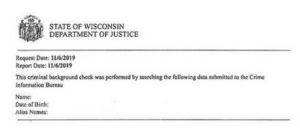
A person’s fingerprints and other information are entered into a central database managed by the Wisconsin Department of Justice’s Crime Information Bureau (CIB). This database—or centralized criminal history—contains detailed records of arrests, charges, prosecutions, court findings, and sentences.
With the sheer number of arrests and charges filed daily coming from so many diverse state and local sources, errors can sometimes occur at various points in the process. These errors can stem from situations involving someone using another person’s identity when arrested, or individual records and information being transposed or confused based on similar personal information, such as names and/or dates of birth (dob), or the passage of time, when arrests do not result in a conviction, yet the arrest and original charge are still listed on a person’s CIB record.
What to Do
Anyone concerned about what is on his or her official CIB criminal record, or that an error or outdated information shows up, can request and file a Criminal History Challenge. See the links in the source section below.
Contact a Milwaukee Criminal Expungement Lawyer
Hiring an experienced criminal defense and expungement attorney to obtain and get a criminal record expunged and errors corrected is advisable. If you think your record is inaccurate, or if people are receiving erroneous background and other personal information about you, contact the Milwaukee, WI criminal defense and employment law attorneys at Gimbel, Reilly, Guerin & Brown, LLP by calling 414-271-1440.
https://www.grgblaw.com/wp-content/uploads/2026/07/Ray-DallOsto-criminal-law-attorney.jpg339440Gimbel, Reilly, Guerin & Brown, LLPhttps://www.grgblaw.com/wp-content/uploads/2026/05/logo.pngGimbel, Reilly, Guerin & Brown, LLP2019-11-14 13:20:582026-07-30 03:16:48Expungement Reform Stalls in State Senate, So What Can You Do to Correct Errors in Criminal Records?
Wisconsin is known for its long, relentless winters. Wisconsinites experience more than 30 snowstorms each year, forcing us to adapt to work, play, and drive in harsh conditions. To those who are no strangers to the snow, driving in inclement weather is normal, but accidents still happen. If you have been in a collision, understanding the factors surrounding liability for a winter weather car accident claims can prepare you for how to proceed.
Determining Liability
Rain or shine, drivers are expected to follow safe driving laws. When winter weather hits, it is important to take extra precautions by taking it slow, allowing extra travel time, and remembering that sudden braking and steering can cause loss of vehicle control. Not all car accidents cause life-altering injuries, but property damage is likely to occur in even the most minor fender benders.
When unforeseen circumstances, such as snow or ice, play a part in car accidents, determining who was at fault for a collision may be difficult. In these cases, multiple factors may play a role, including:
Current road conditions
Witness statements
Your testimony
Evidence (photographs, skid marks on the pavement, car damage)
Foul Weather or Fault?
If a driver coasts through an intersection, is unable to brake because of icy road conditions, and T-bones another vehicle, they may not believe they were to blame for the collision. Victims in these cases will want to ensure that all factors are considered in order to ensure that they can receive compensation for their damages. If you have sustained injuries in this type of car accident, you can work with your attorney to demonstrate liability by proving fault through intentional behavior, negligence, and strict liability. This may allow you to recover compensation for lost wages, medical bills, property damage, and physical and emotional pain and suffering.
Contact Our Milwaukee Auto Accident Lawyers Today
When car accidents occur during inclement weather, they may involve a variety of complex factors, and multiple parties may be at fault. In these cases, you will want to work with an attorney who can help you gather the proper evidence that will establish fault for the accident. At Gimbel, Reilly, Guerin & Brown, LLP we are prepared to help you pursue compensation that fully addresses the damages you have experienced, allowing you to make a full recovery and ensuring that you will be able to maintain financial stability. Contact our Milwaukee, WI car accident attorneys at 414-271-1440 today.
https://www.grgblaw.com/wp-content/uploads/2026/05/logo.png00Gimbel, Reilly, Guerin & Brown, LLPhttps://www.grgblaw.com/wp-content/uploads/2026/05/logo.pngGimbel, Reilly, Guerin & Brown, LLP2019-11-13 13:20:042026-07-30 03:17:19How Can I Demonstrate Liability for a Car Accident in Winter Weather?
While most people who go into business with a partner take care to select ones who have similar goals, inevitably, there will be disagreements from time to time. Often, these issues can be solved through honest, open communication. However, sometimes a dispute can turn severe and ugly very quickly, which is when an experienced commercial litigation attorney can help. How a business is set up can also come into play.
Talking the Issues Out
First and foremost, successful business partnerships are based on the ability to communicate, at no time is this more important then when there is a disagreement between partners. Discussing these issues may demand a certain amount of diplomacy—and perhaps compromise—on both sides, but the outcome of maintaining the partnership and getting the business back on track can be worth it.
Third-Party Help
Sometimes disagreements—and partners—can become emotional, making a mutually beneficial resolution virtually impossible. In such instances, it may help to seek out a mediator. A mediator is an independent third party who is trained in dispute resolution who can help the two sides see eye-to-eye, or at least come together enough to keep the partnership intact and the business running.
Plan for Disagreement
Since rarely do two people agree on everything, one way to help avoid hitting an impasse when a disagreement occurs is to plan ahead. This can be done by developing a partnership or management agreement, which may be part of the business’ bylaws, depending on how the entity is structured. This agreement stipulates how a disagreement will be handled. Resolutions can range from mandatory mediation, to giving one partner final say, or to stipulating a buyout of one partner by the other. If drawn up correctly, such an agreement can go a long way toward preventing a stalemate down the road should a disagreement arise.
Taking a Case to Court
With no such binding agreement, a dispute that cannot be resolved will end up being litigated in court. An unhappy partner can file a civil suit seeking to buy the other partner out or to gain full control of the company. Depending on the circumstances, a judge may rule in favor of either of these options or for a third option, which is to liquidate the business.
Contact Our Milwaukee Civil Litigation Attorneys
When individuals enter into a partnership that goes sour, it can lead to a lot more than hurt feelings, including a total loss of one’s livelihood. Maybe you need to develop a full-proof agreement to head off dispute issues down the road, or perhaps you are already facing a situation that requires help finding a resolution that will protect what is legally yours. Either way, you need a law firm experienced in Wisconsin business litigation. Contact the Milwaukee, WI commercial litigation lawyers of Gimbel, Reilly, Guerin & Brown, LLP at 414-271-1440 to learn how we can help resolve these types of disputes efficiently and effectively.
When a loved one enters a nursing home, it is usually with the idea that they will receive better care than their family or friends can provide at home. Sadly, this is not always the case. However, many nursing homes do provide quality care yet still face accusations that staff members did not provide the proper care. What can health care facilities, such as nursing homes, do to protect themselves from allegations of abuse?
Sad Statistics
No one can deny that nursing home abuse is a real concern. Consider:
An estimated five million elders are subject to abuse annually.
Elder abuse comes in many forms, including physical, emotional, sexual and financial.
An estimated 5-10 percent of abuse reported by alleged victims is physical, 60 percent is verbal, and 14 percent falls under the category of neglect, which often includes the failure to provide proper food, housing, medicine, and/or hygiene.
It is estimated that 13 out of every 14 cases of elder abuse are not reported.
Financial abuse is the most common form of abuse reported by the elderly, with 5.2 percent of cases involving a family member.
Given these statistics, it is easy to understand that when there is an accusation of abuse, nursing homes feel like the underdog, even—or especially—when no actual abuse occurred.
Protecting Against False Accusations
What can a nursing home (or another long-term care facility for the elderly) do to protect itself from accusations? As is often the case, the best course of action is to head off accusations before they occur and have a plan of action in place in case they do. This includes taking proactive steps, such as:
Adequate Staffing: One of the major reasons nursing homes can find themselves charged with abuse—including negligence—is not having enough staff available to properly care for the number of patients in the facility on an ongoing basis. Providing adequate staffing may include having both full time and part-time help, as well as implementing an “on call” schedule to ensure coverage should a staff member be sick or otherwise unable to work his/her scheduled shift.
Procedures and Protocols: Nursing home facilities must have standardized, written procedures and protocols for staff members to follow for all circumstances they may encounter. These procedures must be enforced, and they should include clear penalties for those who do not follow them. The National Adult Protective Services (APS) provides guidelines and suggestions that can help facilities create effective processes.
Training: All caregivers must be properly trained to perform their duties; they also must be trained regarding what constitutes elder abuse and how to spot any signs of such abuse. This training should be ongoing and mandatory for all staff.
Monitoring: Ensure proper monitoring procedures are in place, which may include cameras in more public areas and sign-in sheets for staff to mark the time and actions taken for each patient.
Reporting: Ensure that there is a written procedure to be followed for anyone who wants to report suspected elder abuse. Make sure the steps to take are clear and available to staff, residents, and visitors.
Engage Visitors & Residents
An often-overlooked way to help avoid accusations of elder abuse or neglect is to appeal to the human side of both residents and visitors; sometimes, such allegations are brought on by residents feeling lonely or useless. Similarly, family and friends who feel hopeless when it comes to helping an elderly loved one may—consciously or unconsciously— be looking for someone or something to blame. In these cases, the following can help:
Encourage family members and friends to visit as frequently as possible.
Hold engaging events for residents daily, such as musical events, movies, exercise classes, etc.
Encourage residents to engage with one another by hosting game nights, book clubs, wine and cheese or ice cream socials, etc.
Provide group transportation for routine trips, such as grocery shopping and doctor appointments, which can build camaraderie while assuring such essential tasks get done.
Plan group outings, such as to local plays, farmers markets, and other community events.
Contact Our Milwaukee Nursing Home Attorneys
While the tips above can help nursing homes and other long-term care facilities prevent accusations of abuse, most health care entities will face at least one such allegation in their lifetimes. These types of accusations can destroy the reputation—and bottom line—of a care facility with alarming speed. If your organization is facing allegations of abuse, contact our Milwaukee, WI criminal defense lawyers today at 414-271-1440.
https://www.grgblaw.com/wp-content/uploads/2026/07/GRGB-nursing-home-attorneys.jpg293440Gimbel, Reilly, Guerin & Brown, LLPhttps://www.grgblaw.com/wp-content/uploads/2026/05/logo.pngGimbel, Reilly, Guerin & Brown, LLP2019-10-24 13:18:042026-07-30 03:17:16How Can a Nursing Home Defend Against Accusations of Abuse or Neglect?
The death of a family member can be a difficult, highly emotional time. An estate that is contested can make this an even more stressful situation—and one that requires a good probate litigation lawyer.
What Is Probate?
Probate is the process by which a person’s assets—or estate—are transferred to those who are legally entitled to them. The process is supervised by the court, and it makes sure all debts, taxes, and other expenses owed are paid and that the assets are distributed according to the decedent’s will or the state’s statues.
Formal Probate
There are several types of probate proceedings in Wisconsin. Estates that are contested invariably end up in what is known as formal probate. Formal probate occurs under the supervision of a circuit court judge when:
There is no final will.
All parties involved fail to agree to sign a waiver and consent.
Other cases, such as when a will is contested.
While an attorney is usually recommended for all types of probate proceedings, Wisconsin law mandates an attorney be hired for formal probate—and with good reason.
Legal Grounds for Contesting an Estate
Legally, there are four reasons for a will to be contested:
The will was improperly executed or signed.
The testator (the person who made the will) had a lack of mental capacity.
There was undue influence from another person on the testator.
The will was fraudulent.
While these reasons may seem fairly cut and dry, they can often become very complex.
Real-Life Grounds for Contesting an Estate
While one of the above must be cited as the legal reason for contesting an estate in probate court, the reality is that a suit could be filed for a variety of underlying reasons. A will contest may be initiated by a potential heir who was omitted—fairly or unfairly—from the will and therefore denied any claim to the estate. Some family members may feel they deserve more than what they were left—even in cases where the estate is split evenly among all heirs. This belief could be based on any number of reasons, such as having been a primary caregiver or helping the deceased out financially in the past. In these types of situations, emotions can soar to the point of distorting the perspectives of everyone involved, which makes seeking sound, third-party legal counsel all the more vital.
Contact Our Milwaukee Probate Attorneys
Disagreements over estate issues can grow ugly fast, while the actual court cases can seem like a never-ending nightmare. Whether you need to defend your rights as an heir or contest an estate, you need an attorney with the estate planning experience to guide you through the process from start to successful finish. Contact the Milwaukee, WI Probate lawyers at Gimbel, Reilly, Guerin & Brown, LLP today by calling 414-271-1440.


 Today in America, we are regularly presented with headlines, promotions, and offers on digital and other media that tell us that by submitting a DNA sample (spit into small bottle and mail it in), this will provide a great way to connect generations, build a family tree, and find out more than just the place you’re from through Ancestry DNA and Ancestry Health. A different well-known firm, 23andme, offers equivalent services through its DNA Ancestry + Traits and Health + Ancestry.
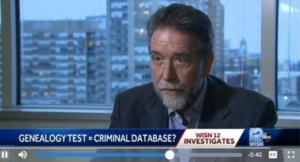 Watch the video here:
 After passing the Wisconsin Assembly earlier this year as A.B. 33, the Wisconsin Senate adjourned this year’s legislative session, without taking action to approve the parallel bipartisan expungement bill pending before it, S.B. 39. The proposed expungement reform bill, which has long been supported by the State Bar of Wisconsin and was favorably considered in previous years and legislative sessions, would change state law involving getting a criminal record
 Sources: