While most people understand that possession of illegal drugs can lead to criminal charges, they may not be aware of which drugs are illegal or the potential penalties they may face. If you are facing charges related to drug possession, you should be sure to work with an experienced attorney to determine your best options for defense.
Controlled Substance Categories
Under Wisconsin law, controlled substances are grouped into five categories, which are known as “schedules.” These schedules are based on whether the drugs have been deemed by the Drug Enforcement Agency (DEA) to have acceptable medical use in the United States, the potential of addiction or abuse, and the danger posed by a substance.
Schedule I: These substances do not have an accepted medical use in the U.S., they are not considered to be acceptable for safe for use while a person is under medical supervision, and they have a high potential for abuse. Some examples of Schedule I drugs include heroin, LSD, cannabis (marijuana), analogs of fentanyl, and ecstasy.
Schedule II: These substances are considered to be highly likely to lead to abuse, including severe physical or psychological dependence. Examples of Schedule II drugs include oxycodone, fentanyl, morphine, opium, amphetamines such as Dexedrine or Adderall, and hydrocodone.
Schedule III: These substances are less likely to lead to abuse than substances in Schedules I or II, and their use may result in low to moderate physical dependence or significant psychological dependence. Examples of Schedule III drugs include buprenorphine (Suboxone), ketamine, and certain types of anabolic steroids.
Schedule IV: These substances are less likely to lead to abuse than substances in Schedule III. Examples of Schedule IV drugs include Xanax, clonazepam (Klonopin), and diazepam (Valium).
Schedule V: These substances are the least likely of the scheduled drugs to lead to abuse, and often, these drugs are sold over-the-counter, but in limited quantities. Examples of Schedule V drugs include Robitussin and pseudoephedrine.
Consequences for Possession of a Controlled Substance
To prove that a defendant committed possession of a controlled substance, a prosecutor must show that the defendant knowingly had one of these substances in his or her possession. Possession does not necessarily mean that the substance has to be physically on your person, and possession can also be shared with another under certain circumstances.
Possession of most Schedule I or II drugs is a felony offense that can result in prison time and substantial fines. The penalty structure is dependent on the type of drug possessed, the quantity, and whether there is evidence of the intent to distribute the drug to another. If you are charged with possession of any type of controlled substance, you should work with an attorney to be sure you understand the charges, the potential penalties, and the best options for defense. A conviction for a drug offense can impact one’s life in many ways, including the right to live in government-subsidized housing, eligibility for federal student loans, and the ability to obtain a variety of professional licenses.
Contact a Milwaukee Drug Possession Defense Attorney
A drug charge is a serious offense that can affect your personal and professional life for years to come. If you have been charged with possession of marijuana, cocaine, or any other controlled substance, the attorneys of Gimbel, Reilly, Guerin & Brown, LLP can provide you with the defense you need. Contact our Milwaukee, Wisconsin drug crimes defense lawyers at 414-271-1440.
On January 1, 2020 Illinois became the eleventh state in the nation to allow the legal use of recreational marijuana. Because Illinois shares a border with Wisconsin, some Wisconsinites may wish to travel to Illinois to purchase legal marijuana. However, the possession of marijuana is still illegal in Wisconsin and can result in drug charges if you are arrested upon your return. That means that even if someone bought marijuana legally in Illinois and brought it back to Wisconsin, it is still illegal to possess that marijuana in Wisconsin.
Criminal Penalties for Marijuana Possession in Wisconsin
Even though the prevailing thoughts on marijuana are changing and several states have legalized the drug, possessing marijuana in Wisconsin can result in harsh criminal penalties. A first-offense marijuana possession may be charged criminally as a misdemeanor and can result in a fine of not more than $1,000 or not more than 6 months in prison, or both. If you have a prior drug conviction, including possession of drug paraphernalia, and are arrested while possessing marijuana, you can be charged with a Class I Felony, which carries with it a potential penalty of a $10,000 fine, 3 ½ years imprisonment, or both.
Local police and sheriff’s departments around the state have already publicly stated and made it clear that they intend to enforce Wisconsin’s marijuana laws and that they will be targeting those who cross the Wisconsin-Illinois border with the substance.
Contact a Milwaukee Criminal Defense Attorney Today
At Gimbel, Reilly, Guerin & Brown, LLP we understand that an arrest for marijuana possession can have a massive impact on your life, your job, and your reputation. We can help you understand the best steps to take following an arrest, and we will provide you with the legal representation you need throughout the course of your case. Contact our Milwaukee, WI criminal defense lawyers today at 414-271-1440.
Sex crimes, also known as sensitive crimes, are treated very seriously in Wisconsin. While any criminal conviction can substantially affect your future opportunities, a conviction for a sex offense will carry with it collateral consequences that will impact nearly every aspect of your life for years to come. It is important to understand what might be at stake if you have been accused of a sex offense in Wisconsin.
The Charges
According to Wis. Stat. §301.45, an individual found guilty of any of the following offenses is required to comply with the sex offender registry:
First, second, or third-degree sexual assault of an adult
First or second-degree sexual assault of a child
Repeated sexual assault of the same child
Sexual exploitation by a therapist
Sexual exploitation of a child
Trafficking a child
Forcing a child to view or listen to sexual activity
Incest involving a child
Child enticement
Soliciting a child for prostitution
Use of an electronic device to aid a sex crime against a child
Sexual assault of a child who was placed in substitute care or by school staff
Exposing a child to harmful materials
Possession of child pornography
While each of the crimes listed above have a different penalty structure, conviction for any one of these offenses mandates that the court order you to comply with the sex offender registration program for a term of either 15 years following the completion of any sentence or for the remainder of your natural life. Those terms are dictated by statute, and in nearly all circumstances, the court cannot exercise its discretion to reduce the term of registration.
In addition to the clearly defined sex offenses listed above, Wis. Stat. §973.048(1m) gives the circuit court authority to order a person comply with sex offender registration requirements for many other offenses, including battery, burglary, arson, and more, if the court determines that the underlying conduct was sexually motivated.
What Does the Sex Offender Registration Requirement Mean to You?
If you are ordered to comply with registration with the Wisconsin Department of Corrections Sex Offender Registry (WDCSOR), the following information will be accessible to the general public:
An offender’s name, including any aliases (once a person is registered, they are not allowed to change their name)
Personal identification information, including date of birth, gender, race, height, weight, and hair and eye color
Detailed information about the offense committed
The offender’s current address
The agency that is currently supervising an offender
The make, model, and description of any vehicles owned by an offender
The name and address of an offender’s employer or school
In addition to the information listed above, the compliance with the registry requires you to provide the Department of Justice with other private information, including social media profile information, any e-mail addresses regardless of whether they are for work, school, or personal use, and your internet credentials for any type of online account, regardless of whether the accounts are public or private.
Any updates or changes to this information must be provided within 10 days of the change. Failure to report or regularly update any of this information may result in felony charges under Wis. Stat. §301.45(6), which carry a possible penalty of up to six years imprisonment and a $10,000 fine for each violation.
Contact Gimbel, Reilly, Guerin & Brown, LLP for help
Have you been accused of a sex crime? If so, you will want to take immediate action to determine your best defense strategy. A conviction that requires registration as a sex offender will impact you for the rest of your life, so you will want to take steps to protect your rights and avoid the consequences that can come with this type of charge. Contact our Milwaukee, WI criminal defense lawyers as soon as possible. Call our office at 414-271-1440 to schedule a consultation today.
https://www.grgblaw.com/wp-content/uploads/2026/07/Nicole-Masnica-criminal-defense-lawyer.jpg294440Gimbel, Reilly, Guerin & Brown, LLPhttps://www.grgblaw.com/wp-content/uploads/2026/05/logo.pngGimbel, Reilly, Guerin & Brown, LLP2019-12-02 20:54:482026-07-30 03:25:32What Charges Require a Person to Register as a Sex Offender in Wisconsin?
White collar crimes such as fraud, money laundering, or securities and antitrust violations, bear severe punishment and a conviction for these types of charges can affect the rest of your life. These criminal investigations tend to be lengthy and complex, and a defendant may undergo a thorough sweep of their financial records. These investigations can be especially concerning if there are potential federal charges, including through the RICO Act. However, this act is not always fully understood, and defendants will want to determine how these types of charges may affect their case.
The RICO Act
In 1970, the United States Congress passed the Racketeer Influenced and Corrupt Organizations Act, also known as RICO, with the purpose of seeking to eradicate organized crime in the United States. Under this law, a person may face federal charges for participating in a racketeering activity that was part of an enterprise that involved interstate commerce.
“Racketeering activity” means any act or threat involving:
These RICO offenses may involve a variety of enterprises, such as family-owned and operated businesses, large corporations, business partnerships, a mob, a gang, or sometimes, a political group. They may include illicit enterprises, legal businesses, governmental agencies, or other entities.
RICO Charges and White Collar Crimes
In order to be convicted under RICO, the defendant must have been employed or associated with an organization that conducted interstate commerce, and they must have participated in two or more illegal racketeering activities within 10 years. Those convicted of racketeering activity are guilty of a federal offense and subject to a period of imprisonment up to 20 years.
In addition to a prison sentence, anyone convicted of engaging in racketeering activity may face large fines if they obtained money or caused personal injury, property damage, or other losses. The fines may be up to two times the gross value gained or two times the gross loss caused (whichever is greater), as well as court costs and the costs of investigation and prosecution. Fines based on personal injury will not take a victim’s pain and suffering into account.
Contact Our Milwaukee Federal Criminal Defense Lawyers
If you are facing accusations of a white collar crime, you will want to be sure to fully understand the extent of the charges you may face and the potential consequences of a federal criminal conviction. At Gimbel, Reilly, Guerin & Brown, LLP we can provide you with the representation you need, and we will work to help minimize the consequences to your life, your freedom, and your reputation. Contact our Milwaukee, WI criminal defense attorneys at 414-271-1440.
In June 2019, newly-elected Wisconsin Governor Tony Evers reversed the eight-year moratorium on criminal pardons imposed by the former Governor Walker, who refused to issue pardons during his two terms in office. Governor Evers issued Executive Order #30, which reversed Walker’s unprecedented shutdown of executive clemency. This Order reopens an avenue of potential relief for those who have lost some of their rights due to a criminal conviction.
Following his consideration of recommendations made by the Governor’s Pardon Advisory Board after their October 14, 2019, hearing, Governor Evers issued pardons to eight individuals on November 8, 2019. “Pardons play a very important role in our criminal justice system and society by giving deserving folks a second chance,” Governor Evers said. “For so many of these individuals, their past record has held them back from achieving personal or career goals, and I look forward to seeing how they use this second chance to give back to their communities and our state.”
While the criteria for pardon eligibility are spelled out (see links in sources section below), the process of obtaining a pardon can be complicated. This makes it advisable for those seeking a pardon to have an experienced criminal defense attorney to guide and assist them in record-gathering, application, development of reasons, references, and at the hearing before the Pardon Advisory Board.
What Is a Pardon?
A pardon is a grant of forgiveness from the Governor for a state criminal conviction that can restore some rights and privileges and relieve certain legal disabilities. A pardon does not mean that a conviction is expunged, erased, vacated, or sealed. Expungement, by contrast, is granted by a court. See Wis. Stat. § 973.015. Wisconsin has a Pardon Advisory Board to review requests and make recommendations to the Governor.
Know Your Rights
An individual convicted of a felony loses a number of rights. In Wisconsin, some rights are returned upon completion of a criminal sentence, including the right to vote and to serve on a jury. This is not the case in all states. However, other rights for convicted felons require a pardon, including firearm rights and the right to hold public office.
Pardon Eligibility
When he reinstated pardons, Governor Evers issued the following criteria:
The pardon must be for a felony conviction.
The original sentence must have been completed in its entirety at least five years before the pardon application is made. This includes all confinement as well as supervised release, such as probation, parole, or extended supervision.
The pardon seeker cannot be facing or have been convicted of any criminal offense in any jurisdiction since completing her/his sentence.
The individual is not currently required to register as a sex offender under Wis. Stat. §301.45.
In addition to meeting the above criteria, there is a fairly lengthy application process that must be completed. In addition to answering specific questions, the following information must accompany the application for each crime for which a pardon is sought:
A certified copy of the criminal complaint
Certified information for each crime
The certified judgment of conviction
Letters of recommendation
Other relevant documents
Meeting the above criteria and providing necessary information provides eligibility to be considered for a pardon, but by no means guarantees that a pardon will be granted.
Policy and Procedure
After the petition and supporting documents are filed, and an applicant is determined to be eligible—a process that can take months based on the volume of requests—individuals seeking a pardon are scheduled to appear before the Pardon Advisory Board for a pardon hearing. This is a public hearing at which pardon seekers and their legal representatives can appear, and they will be asked questions about the crime or crimes committed, their rehabilitation efforts, and why they believe they deserve a pardon. After the hearing before the Pardon Advisory Board, it makes recommendations to Governor Evers.
After accepting recommendations from the Pardon Advisory Board, the Governor may grant a pardon. A pardon may be conditional or unconditional. Unless a special waiver is granted, pardons are not granted for misdemeanors.
Contact Our Milwaukee Criminal Pardon Attorneys
If you have been convicted of a crime and completed your sentence, and you believe a pardon is warranted, it is recommended that you not approach the pardon application process on your own. At the very least, you should consult with a law firm experienced in presenting pardon and executive clemency applications, as is Gimbel, Reilly, Guerin & Brown, LLP. You want to make sure that your pardon application has the best chance to be seriously considered and hopefully granted. Contact the experienced Milwaukee, WI criminal defense lawyers at Gimbel, Reilly, Guerin & Brown, LLP by calling 414-271-1440 to schedule a consultation.
https://www.grgblaw.com/wp-content/uploads/2026/05/logo.png00Gimbel, Reilly, Guerin & Brown, LLPhttps://www.grgblaw.com/wp-content/uploads/2026/05/logo.pngGimbel, Reilly, Guerin & Brown, LLP2019-11-22 20:51:132026-07-30 03:25:35What Does it Take to Obtain a Criminal Pardon in Wisconsin?
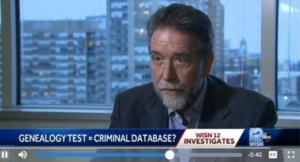
Today in America, we are regularly presented with headlines, promotions, and offers on digital and other media that tell us that by submitting a DNA sample (spit into small bottle and mail it in), this will provide a great way to connect generations, build a family tree, and find out more than just the place you’re from through Ancestry DNA and Ancestry Health. A different well-known firm, 23andme, offers equivalent services through its DNA Ancestry + Traits and Health + Ancestry.
On television, the widely-popular Find Your Roots series on PBS with Henry Louis Gates shows how DNA tests, coupled with traditional genealogy, can find unexpected results, roots and similar connections. Crime shows on television and in movies abound with the regular and glorified use of DNA technology to catch criminals.
The types of DNA typing currently utilized by law enforcement and other forensic examiners include polymerase chain reaction (PCR), short tandem repeats (STR), Y-chromosome, and mitochondrial DNA.
PCR Analysis
The evolution of DNA testing advanced significantly when Dr. Kary Mullis discovered that DNA could be copied in the laboratory, much like it is in the natural world. This copying process, known as polymerase chain reaction (PCR), uses an enzyme (polymerase) to replicate DNA regions in a test tube. By repeating the copying process, a small number of DNA molecules can be reliably increased up to billions within several hours. Remember what the scientists did in Jurassic Park?
The DNA typing technique first used by law enforcement agencies, restricted fragment length polymorphism (RFLP) analysis, requires a biological sample about the size of a quarter, but PCR can be used to reproduce millions of copies of the DNA contained in just a few skin cells. Since PCR analysis requires only a minute quantity of DNA, it can enable the laboratory to analyze highly degraded evidence for DNA. On the other hand, because the sensitive PCR technique replicates any and all of the DNA contained in an evidence sample, greater attention to contamination issues is necessary.
STR Analysis
Short tandem repeat (STR) technology is a forensic analysis that evaluates specific regions (loci) that are found on nuclear DNA. The variable nature of the STR regions that are analyzed for forensic testing intensifies the discrimination between one DNA profile and another. For example, the likelihood that any two individuals (except identical twins) will have the same 13-loci DNA profile can be statistically estimated as being as high as 1 in 1 billion.
The Federal Bureau of Investigation (FBI) has chosen 13 specific STR loci to serve as the standard for its Combined DNA Index System (CODIS) and data base. Most states, including Wisconsin, also have DNA databases. The purpose of establishing a core set of STR loci is to ensure that all forensic laboratories establish uniform DNA databases and share valuable forensic information.
Y-Chromosome Analysis
Several genetic markers have been identified on the Y chromosome that can be used in forensic applications. Y-chromosome markers target only the male fraction of a biological sample. Therefore, this technique can be very valuable if the laboratory detects complex mixtures (multiple male contributors) within a biological evidence sample. Because the Y chromosome is transmitted directly from a father to all of his sons, it can also be used to trace family relationships among males.
Mitochondrial DNA Analysis
Mitochondrial DNA (mtDNA) analysis allows forensic laboratories to develop DNA profiles from evidence that may not be suitable for RFLP or STR analysis. While RFLP and PCR techniques analyze DNA extracted from the nucleus of a cell, mtDNA technology analyzes DNA found in a different part of the cell, the mitochondrion.
It is important to note that all maternal relatives, e.g., a person’s mother or maternal grandmother, have identical mtDNA. This enables unidentified remains to be analyzed and compared to the mtDNA profile of any maternal relative for the purpose of assisting in cold case, missing persons, or unidentified remains investigations.
Old remains and evidence lacking nucleated cells—such as hair shafts, bones, and teeth—that are not amenable to STR and RFLP testing may yield results if mtDNA analysis is performed. For this reason, mtDNA testing can be very valuable to the investigation of an unsolved case, identification of long dead military personnel and pilots, etc.
DNA Genealogy Profiles Used to Identify Criminal Suspects
In addition to the above four types of conventional DNA typing and analysis, a new means of using genetic profiles has developed utilizing the popular and less known databases collected and available from commercial genealogy companies and sites. The solving in 2019 of cold cases involving the so-called Golden State killer, as well as a long-unsolved case in Wisconsin, have sparked considerable media and public interest and attention.
The upside for the public is that by using existing commercial databases, regardless of donors’ knowledge or consent, the criminal is identified, perhaps arrested, and the case solved. However, considerable valid concerns about how this happens; whose DNA profiles are being accessed, examined, and used; and what, if any, privacy rights or protections exist for users of genealogy databases are now being aired and discussed.
A recent journal article, “The Law of Genetic Privacy: applications, implications and limitations,” 6 Journal of Law and Biosciences (Oct. 2019), states that most people view healthcare and genetic information about themselves as private. Each person’s genome, or full complement of DNA, is unique, but the specific variants within an individual’s genome may be widely shared with biological relatives and even across the entire human population. This mixed character of the genome—as a uniquely individual assemblage of widely shared common elements—imbues it with a dual private and public significance that confounds any discussion of policy addressing genetic privacy. On one hand, DNA has been conceptualized as a unique identifier and a person’s “book of life,” which provides insights into many aspects of the person’s make-up and future. But who has access to this book, and how is the use of the resulting information regulated, if at all?
This concern leads many people to want to control who has access to their genetic information about them to support strong privacy protections or even personal genetic data ownership. Significant concepts within the realm of genetic privacy are informational privacy (who has access to personal information), confidentiality, security, and anonymity.
Deciding how much control people should have over the access to and use of their genetic data about is taking on increased urgency. Until recently, there simply was less genetic information to worry about, because a person’s genetic makeup could be inferred only by studying his or her phenotypic characteristics and family history, e.g., eye color. Dramatic advances in technology and methods, and the proliferation and widespread popularity of DNA-based genealogy, has now made it possible to examine DNA directly, over large (and often unsuspecting) populations, with increasing accuracy.
To what end, for what purposes, and by whom? Should insurance companies be allowed access to health-related DNA records without the knowledge and consent of the donor? Should there be protections providing for a search warrant, some kind of advance notice, consent, limited access, or should these databases be wide-open to whomever might want access to them, like criminal and court histories are on the Circuit Court Access Program (CCAP) in Wisconsin?
Right now, it is largely a matter of what the DNA genealogy company decides as to whether or not your personal, unique DNA profile data is kept private or freely accessible to anyone, without notice. Read the fine print. The Fourth Amendment does not provide privacy protections for the actions of private companies, and current statutes do not either.
When Your Case Involves DNA and Forensic Science Evidence
It is a frightening thing to find yourself accused of a crime. It is even scarier to learn that circumstantial evidence and forensic DNA evidence may supposedly tie you to that crime, or that your private information has been disclosed and is being used without your knowledge or consent. Do not be fooled, bullied, or blindsided, and whatever you do, do not go it alone. Learn about the science and your rights by referencing the sources noted below.
Know and assert your rights by seeking assistance from skilled and knowledgeable criminal defense and trial attorneys who have a depth of experience dealing with DNA and other forensic science evidence issues and will protect you and your rights. Contact Gimbel, Reilly, Guerin & Brown, LLP at 414-271-1440 and schedule a consultation today. Our Milwaukee, Wisconsin criminal defense lawyers and privacy lawyers will knowledgeably and aggressively protect your rights and try to obtain the most favorable outcome for you that is practicable.
Clayton, Evans, et al., “The Law of Genetic Privacy: applications, implications and limitations” 6 Journal of Law and Biosciences (Oct. 2019), found at this link – –https://academic.oup.com/jlb/article/6/1/1/5489401
After passing the Wisconsin Assembly earlier this year as A.B. 33, the Wisconsin Senate adjourned this year’s legislative session, without taking action to approve the parallel bipartisan expungement bill pending before it, S.B. 39. The proposed expungement reform bill, which has long been supported by the State Bar of Wisconsin and was favorably considered in previous years and legislative sessions, would change state law involving getting a criminal record expunged. If passed by the Senate and signed by Governor Evers, the expungement reform bill will significantly help alleviate the negative impact a criminal record can have on individuals seeking employment, housing, volunteer work, and in other areas where the stigma of a conviction can pose a roadblock, even in cases where the crime was nonviolent, a misdemeanor or lower-class felony, and/or committed many years ago.
Current Law and Proposed Revisions
Currently, expungement in Wisconsin is available to persons convicted of misdemeanors and some minor felonies when they were under the age of 25, and who requested expungement at the time of their sentencing hearing.
A.B. 33 and its Senate equivalent would allow persons convicted of misdemeanors and minor and non-violent felonies, regardless of how old they were at the time of the offense, to have their records expunged. These bills would also remove the current restrictions that an expungement request must be made at the original sentencing hearing and would apply to all previous convictions, regardless of when such occurred, and allow for expungement petitions to be filed with the court at a later date.
In addition to the remedy of expungement, there currently exist some administrative mechanisms to address mistaken and outdated criminal records that can show up on background checks and other inquiries into an individual’s history.
What Conduct Can Result in a Criminal Record
Wisconsin Statutes §165.83(2)(a). requires the state Department of Justice to keep, and state and local law enforcement agencies to submit arrest and charge information to the DOJ Crime Information Bureau (CIB), including fingerprints, descriptions, photographs and any other available identifying data on both adults and juveniles who have been arrested or taken into custody in this state:
1. For an offense which is a felony or which would be a felony if committed by an adult.
2. For an offense which is a misdemeanor, which would be a misdemeanor if committed by an adult or which is a violation of an ordinance, and the offense involves burglary tools, commercial gambling, dealing in gambling devices, contributing to the delinquency of a child, dealing in stolen property, controlled substances or controlled substance analogs under ch. 961, firearms, dangerous weapons, explosives, pandering, prostitution, sex offenses where children are victims, or worthless checks.
3. For an offense charged or alleged as disorderly conduct but which relates to an act connected with one or more of the offenses under subd. 2.
4. As a fugitive from justice.
5. For any other offense designated by the attorney general.
The experience of criminal defense attorneys at GRGB shows that many non-criminal ordinance violations can sometimes show up insult in a CIB record. The CIB reports a considerable amount of this information to the National Crime Information Center (NCIC).
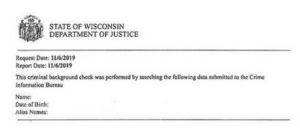
A person’s fingerprints and other information are entered into a central database managed by the Wisconsin Department of Justice’s Crime Information Bureau (CIB). This database—or centralized criminal history—contains detailed records of arrests, charges, prosecutions, court findings, and sentences.
With the sheer number of arrests and charges filed daily coming from so many diverse state and local sources, errors can sometimes occur at various points in the process. These errors can stem from situations involving someone using another person’s identity when arrested, or individual records and information being transposed or confused based on similar personal information, such as names and/or dates of birth (dob), or the passage of time, when arrests do not result in a conviction, yet the arrest and original charge are still listed on a person’s CIB record.
What to Do
Anyone concerned about what is on his or her official CIB criminal record, or that an error or outdated information shows up, can request and file a Criminal History Challenge. See the links in the source section below.
Contact a Milwaukee Criminal Expungement Lawyer
Hiring an experienced criminal defense and expungement attorney to obtain and get a criminal record expunged and errors corrected is advisable. If you think your record is inaccurate, or if people are receiving erroneous background and other personal information about you, contact the Milwaukee, WI criminal defense and employment law attorneys at Gimbel, Reilly, Guerin & Brown, LLP by calling 414-271-1440.
https://www.grgblaw.com/wp-content/uploads/2026/07/Ray-DallOsto-criminal-law-attorney.jpg339440Gimbel, Reilly, Guerin & Brown, LLPhttps://www.grgblaw.com/wp-content/uploads/2026/05/logo.pngGimbel, Reilly, Guerin & Brown, LLP2019-11-14 13:20:582026-07-30 03:16:48Expungement Reform Stalls in State Senate, So What Can You Do to Correct Errors in Criminal Records?
Computer and digital technology is constantly changing and ever-expanding. As a result, certain types of activities that might not seem problematic at the time could end up causing serious legal problems. State laws governing theft, and its civil cousins misappropriation and conversion, have expanded to include unauthorized possession, use and misuse of computers and digital information, the internet, use of identity, and capturing and sharing images.
Internet crimes are ever-increasing and the definitions applied and consequences change rapidly, with the sentences more and more retributive. Known collectively as computer crime laws, these statutes cover a wide scope of activities, and violations of these laws can result in a broad range of criminal penalties. In addition to criminal charges, these crimes and activities can also form the basis for restitution claims and large money damage lawsuits, which include punitive and treble damages.
Some Types of Computer Crimes
We have all heard of “hacking,” or breaking into a computer system with the intention of stealing information or harming a computer network. However, there are many computer crimes that are much less familiar; in some cases, the accused may not even realize the activity is illegal.
A study cited by the Washington Post found that more than half of all employees take with them proprietary data, either knowingly or unwittingly, when they leave a company. This is not surprising, given the ubiquity of computers, smartphones, and tablets in the workplace, as well as the ever-greater frequency of job changes in the professional market. However, it does expose them to potential criminal and civil liability.
Some other examples of common computer crimes include:
Improper access of a computer, system, or network
Introducing a virus or other malware to a computer system
Copying or retaining possession of digital information of another
Interfering with someone else’s computer access or use
Using encryption to assist in a crime
Cyberbullying
Falsifying the source information of email communication
Misuse or unauthorized use of identifying information of another
In many states, including Wisconsin, some of the above acts are punishable under existing criminal laws. For example, there is no electronic-device-specific state statute pertaining to cyberbullying, but it can be prosecuted under existing Wisconsin laws, including those related to harassment, stalking, or unlawful use of a phone or computer.
Parallel federal criminal laws on the same subjects add to the complexity of these cases.
In Wisconsin, crimes that are not covered by other criminal legal statutes may be prosecuted under computer-specific laws, two categories of which include:
Computer Data and Programs
In Wisconsin, it is a crime for anyone to “willfully, knowingly and without authorization:”
Modify, destroy, access, take, copy, or use computer data; or
Intentionally cause an interruption in service by sending messages or data to a computer or a computer program or network that exceeds the target’s processing capacity.
These acts can result in being charged with felony offenses, including Class I and Class F felonies that carry with them the potential of state prison, jail, probation, and substantial fines.
Computers, Computer Equipment, or Supplies
Anyone who “knowingly and without authorization” modifies, destroys, accesses, takes, copies, or uses computer equipment or supplies may be charged with a variety of felonies or a Class A misdemeanor. Felony charges may apply:
If the offense was committed with the intent of defrauding another person or illegally obtaining property (Class I felony)
If the damage to the computer, network equipment, or other related supplies is more than $2,500 (Class H felony)
If the offense put another person at risk of death or bodily harm (Class F felony)
These classes of felonies carry the following potential penalties:
Class I felony: fine of up to $10,000, prison sentence of up to three years and six months imprisonment, or both
Class H felony: fine of up to $10,000, prison sentence of up to six years, or both
Class F felony: fine of up to $25,000, a prison sentence of up to 12 years and 6 months, or both
Under Wisconsin law, if a person disguises the identity or location of the computer she or he is using to commit the act in an effort to keep from being connected to the potential crime, the original penalty for the felony or misdemeanor can be enhanced and increased by added years of incarceration and increased financial penalties.
In addition to the above penalties, a judge may place restrictions on the offender’s use of computers for as long as the length of an offender’s potential sentence, unless the offense is punishable by forfeiture. A person or entity who harmed by the alleged actions may also pursue compensation through a civil lawsuit.
Civil Consequences and Damages
The problems associated with a computer crimes allegation and conviction do not end with the criminal fines, supervision, and prison or jail time. In Wisconsin, any person or entity whose computer and digital data was taken or compromised, or who suffered other injuries, may bring a civil lawsuit against the person charged with computer crimes, before or after conviction of that crime, for potentially significant money damages. In these cases, a court may award injunctive relief to the alleged victim, plus money damages, costs and attorneys’ fees. Wis. Stat. §943.70(5).
A civil lawsuit for damages can also allege causes of action based upon federal law, like the Computer Fraud and Abuse Act (CFAA), 18 U.S.C. § 1030, which provides both criminal and civil penalties for victims of security breaches. Under the CFAA, employers, for instance, can seek damages from former employees who access company computers “without authorization” or who exceed authorized access. Additional related grounds for criminal prosecution and civil liability exist under the Economic Espionage Act, 18 U.S.C. § 1831 and for theft of trade secrets under 18 U.S.C. § 1832.
Contact a Milwaukee, Wisconsin Computer Crimes Attorney
Computer crime investigations, prosecutions and court cases are serious, and have potentially severe financial and legal implications, as well as potential loss of freedom. These types of cases often start with a seemingly innocuous questioning by private individuals and entities, working in tandem with law enforcement, unbeknownst to the target of the investigation. These cases require forensic computer experts and knowledge of the law enforcement investigative techniques, software for mirror imaging, etc. The attorneys at Gimbel, Reilly, Guerin & Brown, LLP have considerable experience in this area, and we have defended persons and entities in computer crimes cases in state and federal court, including civil damages claims. If you or someone you know is facing and investigation or is accused of computer crimes, you need experienced legal representation. Do not go it alone at any stage. Our experienced attorneys can help you determine the best approach and defense strategy, appropriate experts, etc., and we will work to help you try to achieve a positive outcome to your case. Contact our Milwaukee criminal defense attorneys at 414-271-1440.
Brian Krebs, Data Theft Common by Departing Employees – http://www.washingtonpost.com/wp-dyn/content/article/2009/02/26/AR2009022601821.html
State Bar of Wisconsin – https://www.wisbar.org/NewsPublications/WisconsinLawyer/Pages/Article.aspx?Volume=89&Issue=6&ArticleID=24907
https://www.grgblaw.com/wp-content/uploads/2026/07/grgbpic.jpg293440Gimbel, Reilly, Guerin & Brown, LLPhttps://www.grgblaw.com/wp-content/uploads/2026/05/logo.pngGimbel, Reilly, Guerin & Brown, LLP2019-10-18 13:14:202026-07-30 03:25:49What Types of State Criminal and Related Consequences Can Result From Computer-Related Crimes?
Wisconsin, like most states, considers arson to be a very serious criminal act and imposes stiff penalties on anyone convicted of the crime. An individual facing arson accusations and charges in Wisconsin should consult with and work with a skilled criminal defense attorney who is also familiar with applicable insurance law and claims procedures, to best deal with and understand the charges and potential consequences of a conviction.
Arson to Buildings and Property Damage
Anyone who commits one of the following acts may face felony arson charges under Wisconsin law:
Uses fire to intentionally damage a building that belongs to another person without that person’s consent, Wis. Stat. § 943.02
Uses fire to damage the property of another person or entity, Wis. Stat. §943.03
Uses fire to deliberately damage a building (your own or another’s) with the intent to defraud an insurer, Wis. Stat. § 943.02(1)(b)
Uses explosives to intentionally damage any of another, Wis. Stat. § 943.02
Arson of a building is a Class C felony that is punishable by up to 40 years in a state prison, up to $100,000 in fines, or both.
Arson to Property Other Than Buildings
If a person employs fire to damage any property other than a building without the owner’s consent, and that property is valued at $100 or more, they may face a Class I felony arson charge. Wis. Stat. § 943.03. Class I felonies are punishable by a state prison term of up to three years and six months, a maximum fine of $10,000, or both.
Arson with Intent to Defraud
A person who uses fire to damage any property other than a building with the intent to defraud that property’s insurer may face Class H felony arson charges. Wis. Stat. § 943.04. Proof that the alleged arsonist collected or attempted to collect on the insurance policy is considered relevant in Wisconsin, but is not essential to establish intent. A Class H felony in Wisconsin is punishable by up to six years in a state prison, a fine of up to $10,000, or both.
Injury and Damages
The problems associated with an arson conviction do not end with the state-imposed fines, supervision, and prison or jail time. In Wisconsin, anyone who suffered personal injury or whose property was damaged due to arson may sue the person convicted of the crime for damages. In these cases, the court may award treble damages (3x) to the alleged victim, plus costs and attorneys’ fees.
Fires and Damage Claims Are Investigated Intensively
Statistics show that while the intentional setting of fires, arson for profit, insurance fraud and unexplained causes under investigation may account for 5% of all fire or explosion incidents, intentional causation is much more significant where death occurs. According to FEMA and the U.S. Fire Administration, the leading causes of residential building fire deaths for 2017, are as follows: 1) Unintentional, careless: 435 deaths; 2) Intentional: 370 deaths; and 3) Causes under investigation: 355 deaths.
A fire loss claim is treated significantly different than other insurance claims, e.g., an auto accident. The presumption of the insurance investigator is not innocence. These claims are investigated intensively from the get-go, and fire insurance claims agents and investigators work in tandem with law enforcement, fire departments, the State Fire Marshal, and sometimes BATF.
In addition to sworn statements and proofs of loss from the insured, fire insurers sometimes demand that the insured participate in an Examination Under Oath (EUO). An EUO is conducted to obtain evidence when an insurance company suspects the insured of fraud or has otherwise contributed to the loss. An insurance policyholder has typically agreed to cooperate with the insurer and undergo an EUO, within the fine print of the fire insurance policy. Wisconsin courts have held that if an insured does not so cooperate, coverage may be denied.
Contact a Milwaukee, WI Arson Defense Lawyer
Arson accusations are serious, and have potentially severe financial and legal implications, in addition to denial of fire insurance claims. However, these types of cases are often not clear cut, and investigators sometimes jump the gun in concluding that arson occurred. Forensic examinations beyond what local authorities or the State Fire Marshal conduct may need to be done. If you or someone you know is facing arson accusations, charges, or is requested to undergo an Examination Under Oath or risk denial of a fire claim by an insurer, you need experienced legal representation. Do not go it alone. At Gimbel, Reilly, Guerin & Brown, LLP our experienced attorneys can help you determine the best approach and defense strategy, appropriate experts, etc., and we will work to help you try to achieve a positive outcome to your case. Contact our Milwaukee criminal defense attorneys at 414-271-1440.
So far in 2019, Wisconsin has seen the beginning of the reinstitution of pardon policy by the Governor and passage of an expungement reform bill by the state Assembly. If approved by the state Senate, this bill would expand the age range in which expungements are available to previous offenders and go a long way to address unnecessary restrictions that have been placed on expungement petitions by several court of appeals decisions. A Pardon Advisory Board was named by Governor Evers this summer, which will help to facilitate the pardon process, and will allow pardons to be considered and approved, for the first time in over eight years.
It is important to understand that executive pardons and expunging of conviction records are not the same thing. A governor’s pardon does not expunge (clear) a criminal record; but rather it relieves the person pardoned of the disabilities of a criminal conviction. Expungement under current Wisconsin statutes (973.015) seals a criminal case file. However, it does not clear an arrest and conviction record off of the Crime Information Bureau records in Madison, and it may or may not remove the case from the publicly accessible Circuit Court Access Program (CCAP).
Expungement FAQs
1. If my record is expunged, can no one find out about my case? Having your record expunged does not mean that it disappears from all legal departments. Under current law, a judge can order the expungement of the circuit court’s record of your case, but not the records of other legal agencies. The Wisconsin Department of Justice Crime Information Bureau (CIB) has a record of all felony and many misdemeanor arrests and convictions, even those that have been expunged. That means that any employer who runs a background check through the CIB can receive expunged records.
2. Do I still have to admit my conviction if my record was expunged? Depending on the context, you may still have to admit your criminal record, even if it was expunged, e.g., in professional license applications, military enlistment, etc. Though the record was expunged, and the court record has been sealed, the original conviction has not been set aside or reversed. Many job applications ask if you have ever been convicted of a crime. You should consult with knowledgeable legal counsel when faced with questions about prior arrests, convictions, etc.
3. If I was arrested but not charged with a crime, can I get that expunged? The only people eligible to have their record expunged are those who have been convicted of a crime. If no conviction occurred, the record cannot be expunged. However, there are means to remove arrest records from the CIB, which the lawyers at Gimbel, Reilly, Guerin & Brown, LLP can assist you with.
4. Can my record still be expunged if my charges were dismissed? Since expungement only applies to a conviction, dismissed charges do not qualify for expungement. Dismissed charges can be removed from CIB records, and under reforms approved by the State Court Director last year, which Attorney Ray Dall’Osto was involved with, removal from CCAP is an option as well, and this will be automatic two years after a dismissal.
A Milwaukee Expungement Lawyer Can Help
Clearing one’s arrest or conviction record, as well as responding to employer or license questions about same, can make all the difference. It can give a fresh start in the professional world and allow them to close a chapter from their past. At Gimbel, Reilly, Guerin & Brown, LLP, we understand the impact that an arrest and conviction record has and the effects that expungement and other record-clearing methods can have on an individual’s future, especially for those just getting started in the business world. Firm attorneys have been at the forefront of expungement reform efforts. We have many years of combined criminal defense as well as employment and licensing law experience, and we know what is necessary to get results for our clients. If you are seeking to get your record cleared or expunged, contact our Milwaukee, WI criminal defense and employment attorneys at 414-271-1440.


 Today in America, we are regularly presented with headlines, promotions, and offers on digital and other media that tell us that by submitting a DNA sample (spit into small bottle and mail it in), this will provide a great way to connect generations, build a family tree, and find out more than just the place you’re from through Ancestry DNA and Ancestry Health. A different well-known firm, 23andme, offers equivalent services through its DNA Ancestry + Traits and Health + Ancestry.
 Watch the video here:
 After passing the Wisconsin Assembly earlier this year as A.B. 33, the Wisconsin Senate adjourned this year’s legislative session, without taking action to approve the parallel bipartisan expungement bill pending before it, S.B. 39. The proposed expungement reform bill, which has long been supported by the State Bar of Wisconsin and was favorably considered in previous years and legislative sessions, would change state law involving getting a criminal record
 Sources: